
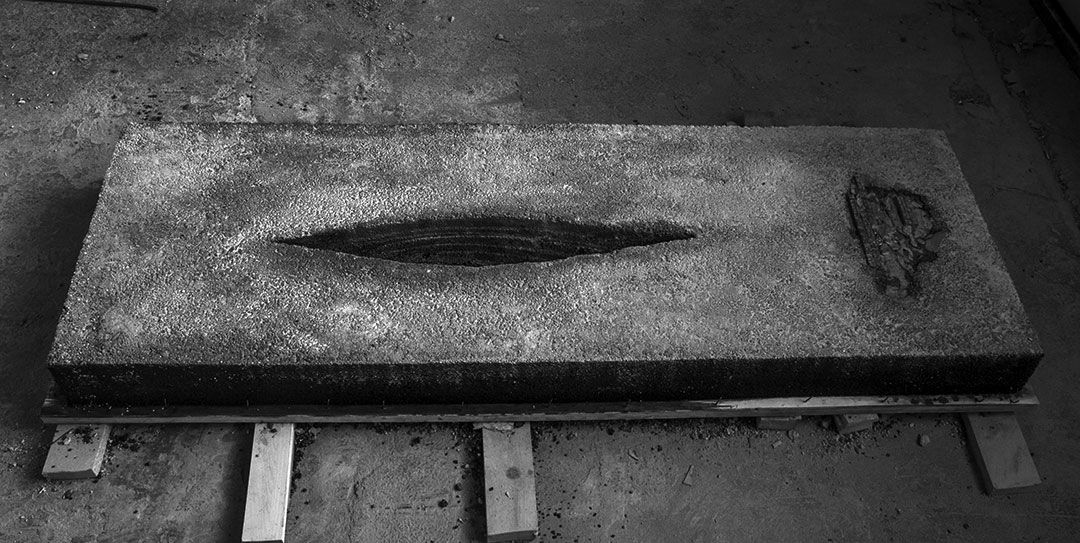
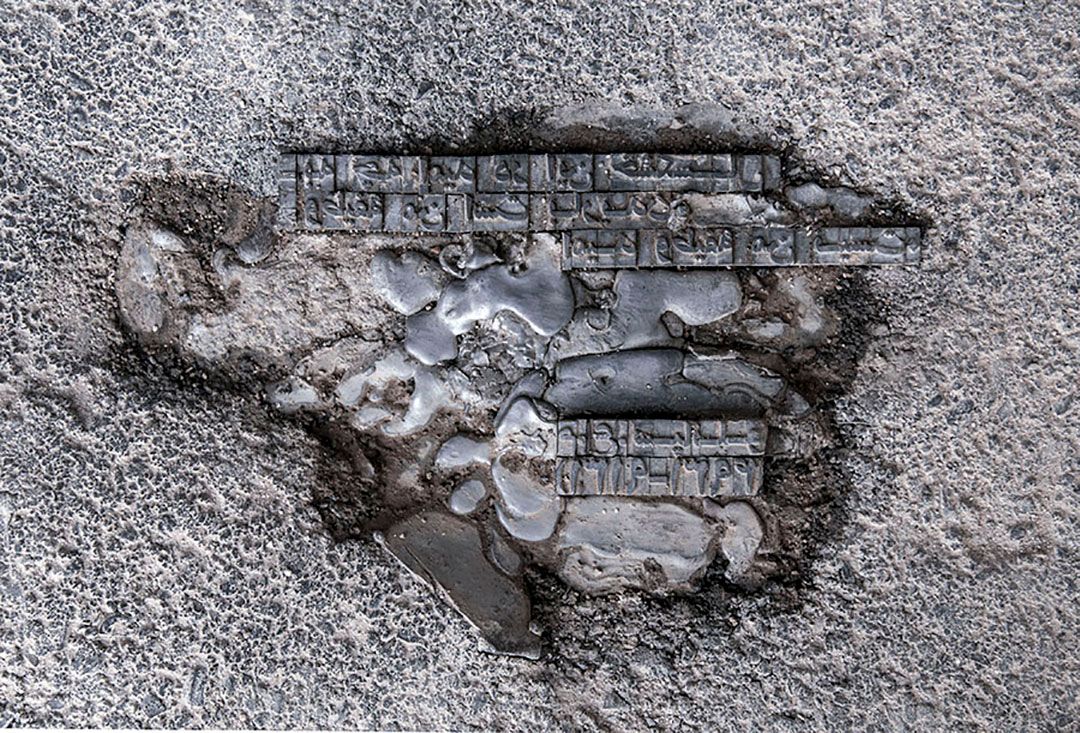
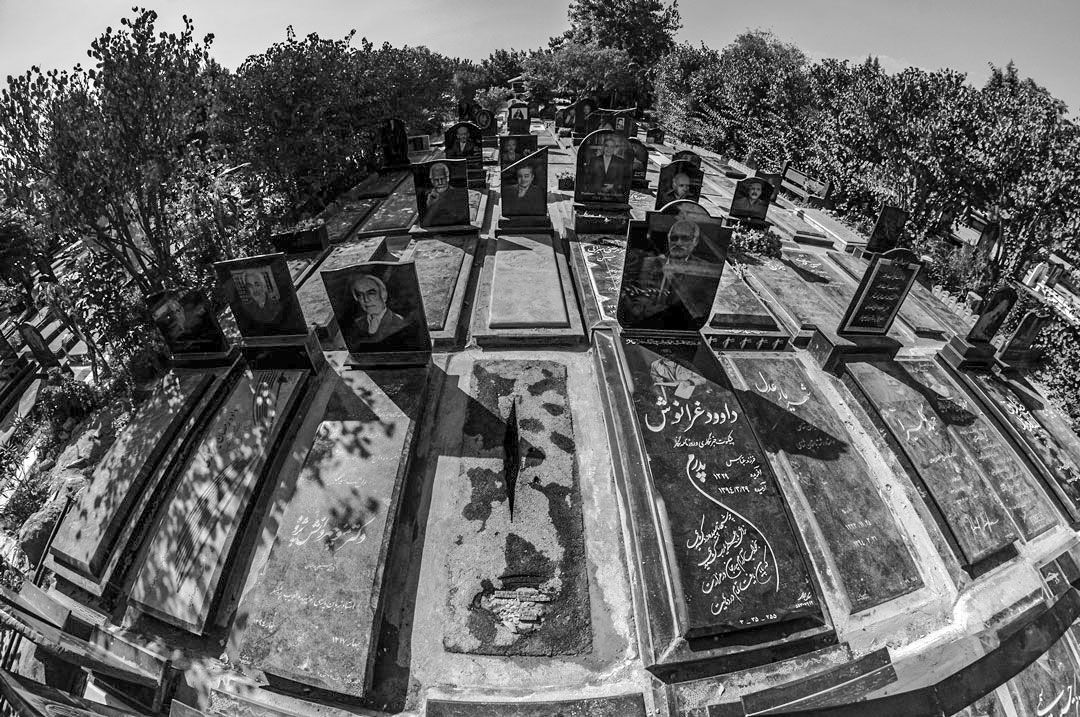
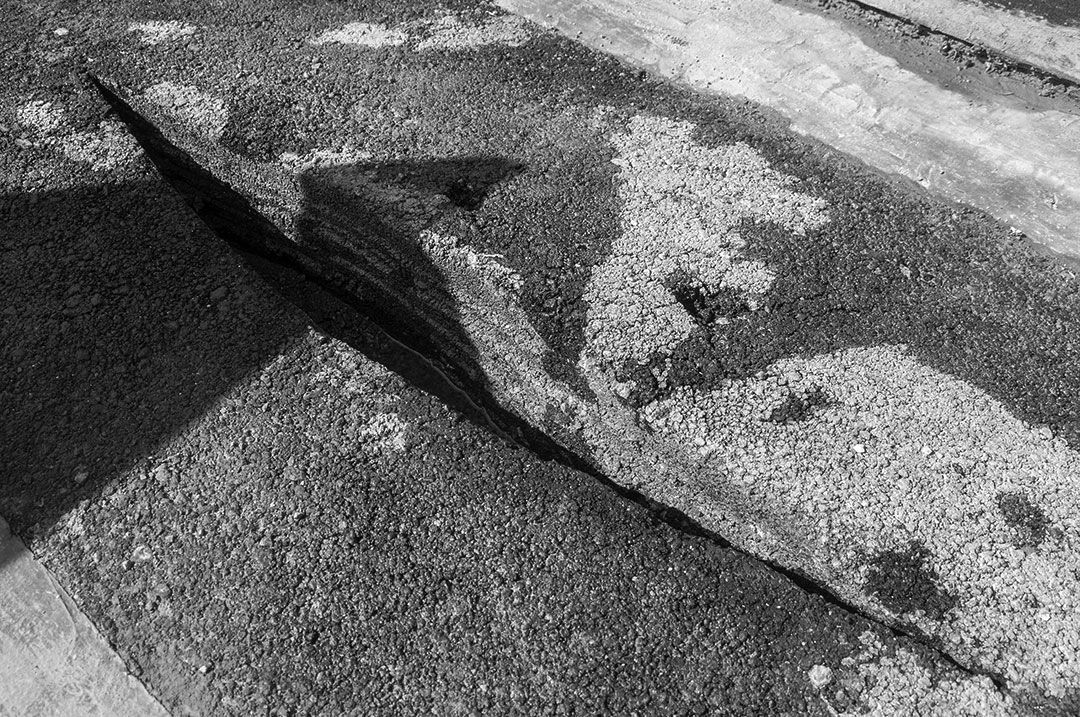
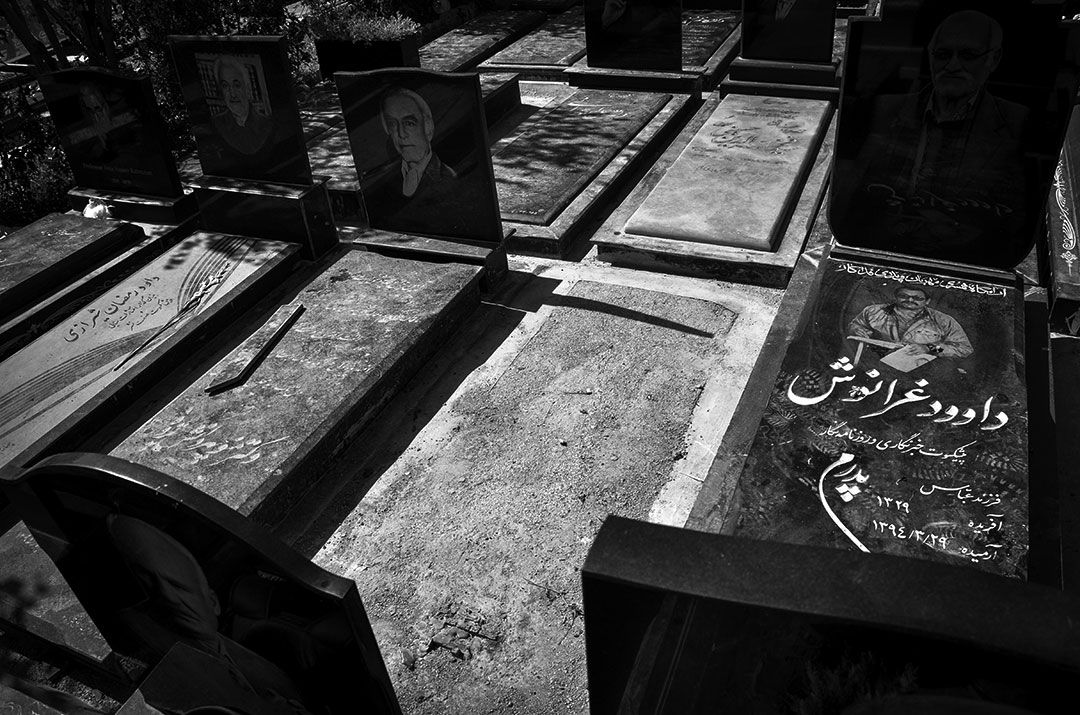
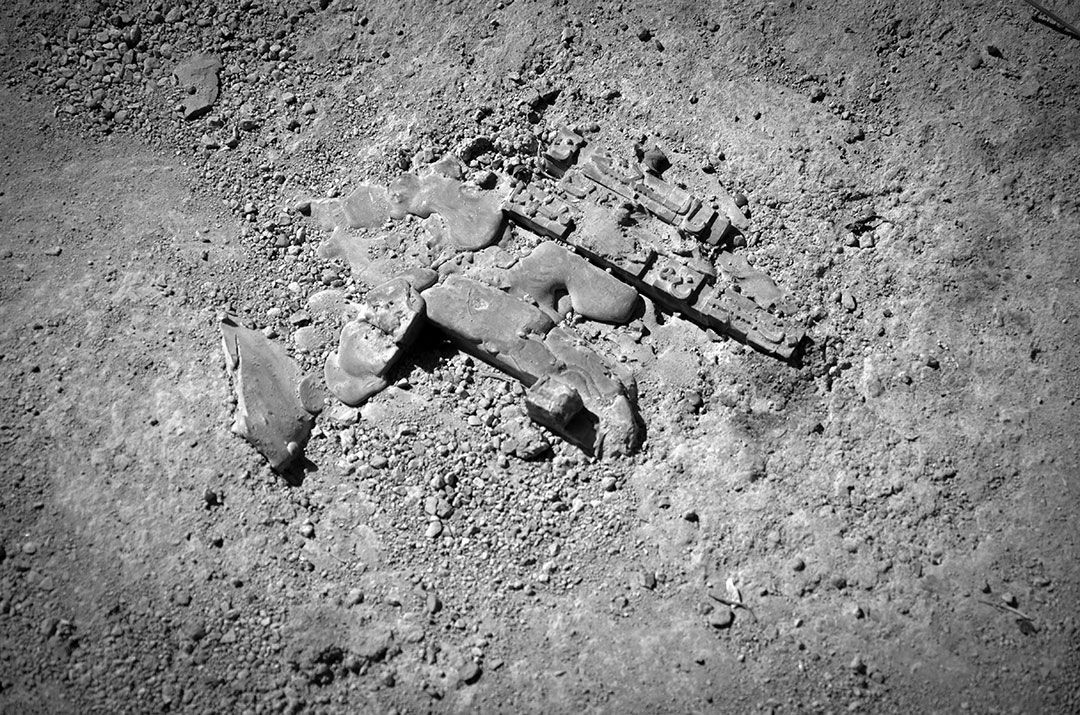
2016, asphalt concrete and type metal, Behesht-e Zahra Cemetery, Tehran.
Mohammad-Ali Sepanlou (1940–2015) was an Iranian poet, writer, translator and critic, and one of the founding members of the Writers’ Association of Iran. Closely associated with Tehran, he was often referred to as the “poet of Tehran”; the city, its streets, histories and transformations recur throughout his work.
Barbad Golshiri designed and made Sepanlou’s grave marker for the Namavaran section of Behesht-e Zahra Cemetery in Tehran. It was installed on 27 July 2016. Instead of conventional gravestone materials, Golshiri used asphalt and type metal. The asphalt evokes Tehran itself, while the large negative form cut into its surface resembles both a boat and an open wound. The boat refers to Sepanlou’s Boating in Tehran: an impossible vessel set within the asphalt of the city.
The inscription was composed from lead type and included the closing lines of Sepanlou’s poem The Sailor of the Dry River: “It is my duty to rain / hope is not my duty.”
The grave marker was vandalised within about a week of its installation. Its surface was first attacked with hammer and chisel, then cut and defaced with a power tool. In a later attack, the entire marker was covered with cement. After the destruction, only a fragment of the inscription remained legible: “drought … hope is not mine.”
۱۳۹۵
آسفالت و حروف چاپی سربی، گورستان بهشت زهرا، تهران
سنگ مزار محمد علی سپانلو را هم تخریب کردند، رادیو زمانه
پاسخ برادرزاده سپانلو به تکذیب تخریب سنگ قبر شاعر
دیدی که خاک جمله فسانه است؟، باربد گلشیری
گفتگو با فرج سرکوهی در مورد تخریب سنگ قبر محمد علی سپانلو، بیبیسی فارسی